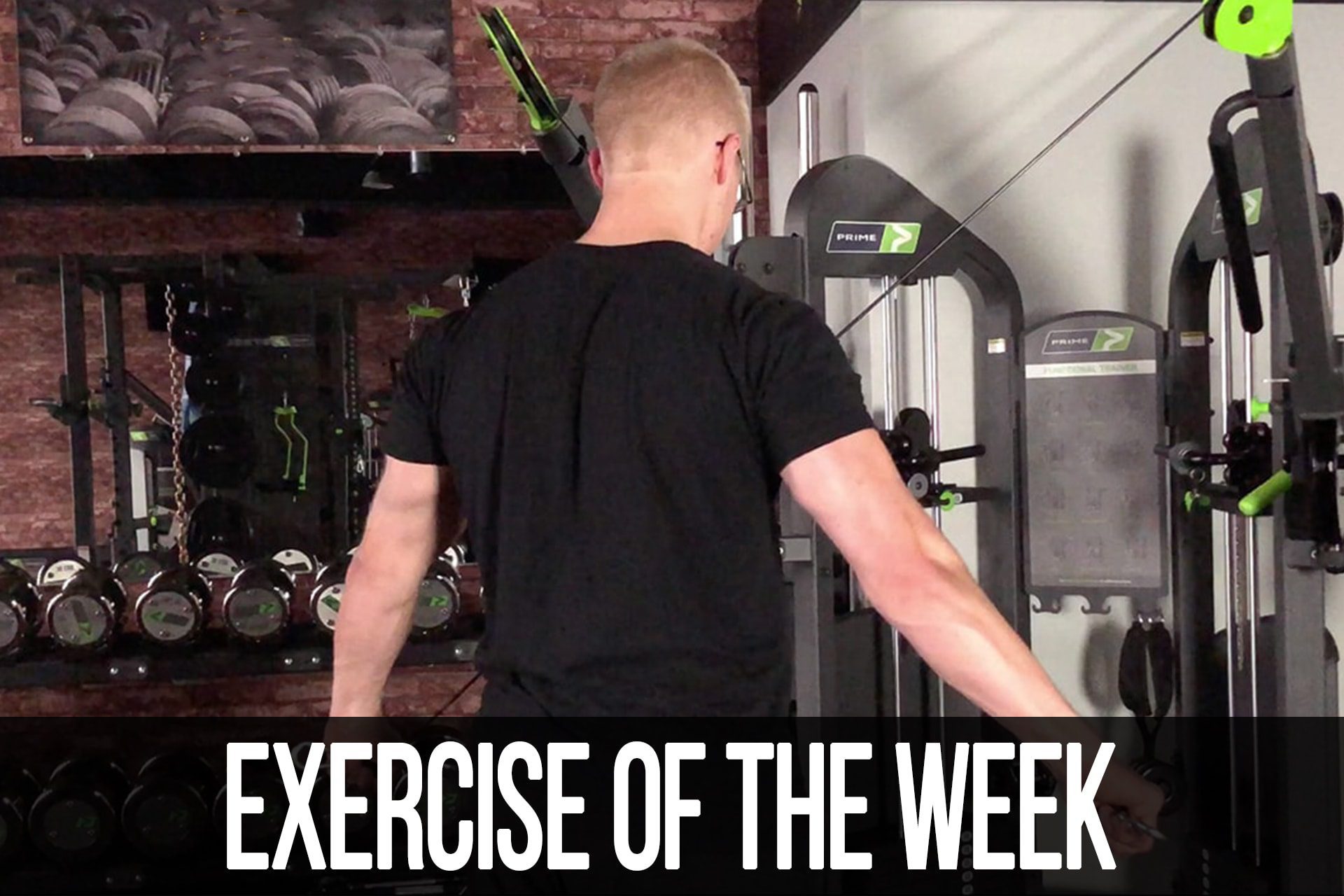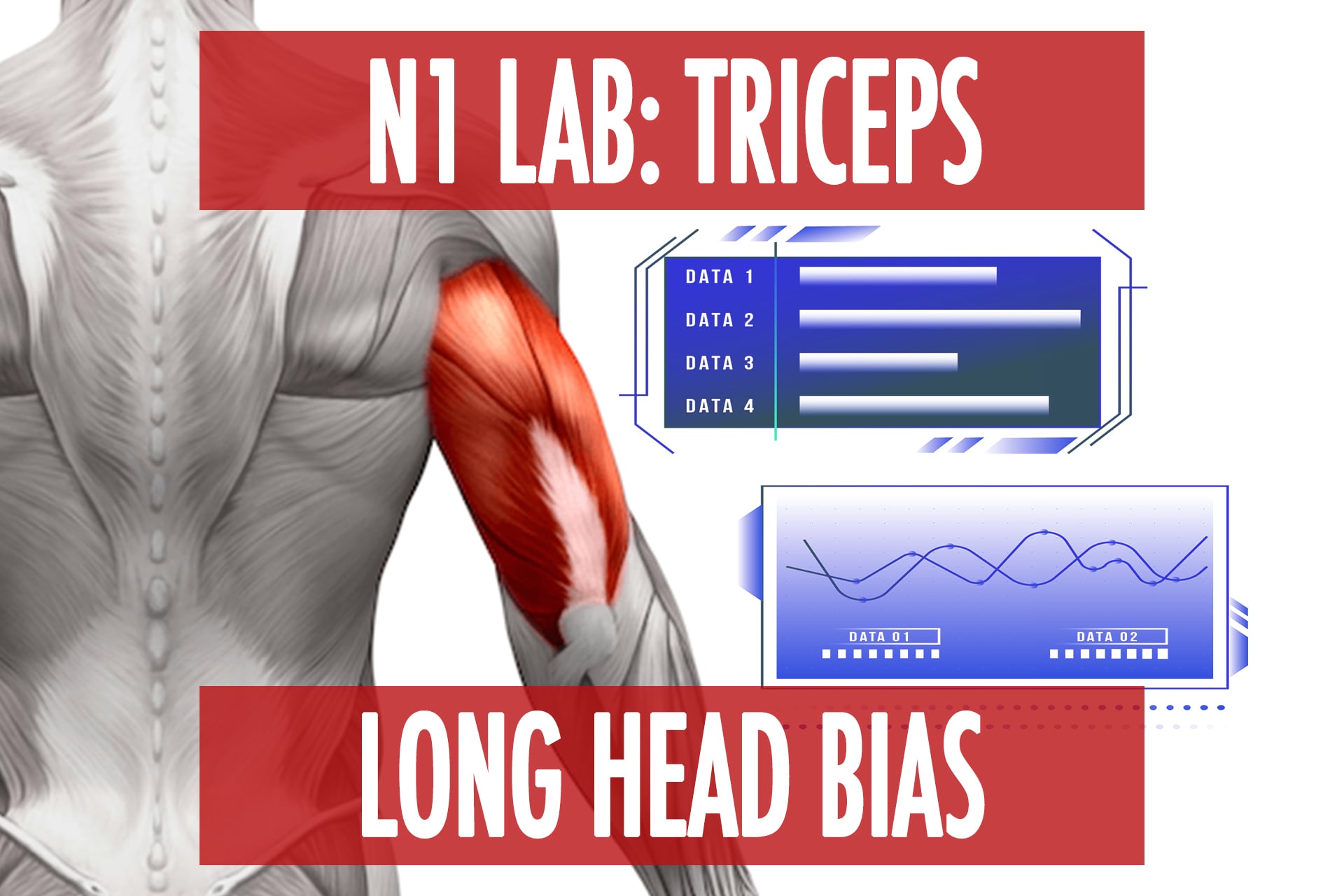
The medial head of the triceps do not cross the shoulder, so biasing them is in a way decreasing the participation of the other two heads relatively by the should position, but also combing a press type motion with the elbow extension.
This type of pressing gets you the most loading at the elbow, much better than say a close grip bench press, while still being in a good mechanical plane for elbow and shoulder health and muscular bias.
I included an EZ bar example as well. But the cable option is definitely my preference.
Learn more about exercise analysis, setup, and selection in our Biomechanics Course
Learn how to apply your biomechanical knowledge to writing workouts with our Program Design Course


The first slide is comparing the ratio of the three heads in this exercise.
The next slide is showing the difference between this exercise and the other lengthened exercises.
The last slide shows the difference between the medial biased exercise and the other short exercises.
Since the medial triceps get maximum range in this motion, I wanted to compare it to both short and long exercises for the other heads.
Because the anatomy and the neurology lines up exactly how we’d expect, I’m very confident in the results. However, we can’t say how significant the hypertrophy differences is, and this will likely carry quite a bit among individuals. Regardless of how much of a difference they do make, it’s also going to be the most that is humanly possible.
Worst case scenario this is another tool you can use when it’s applicable, but no exercise is a must.
Please Log In to Submit Your Question