How Great Execution Makes It Easier to Gain Muscle

n1 training


If we simplify the stimulus for muscle growth into the local and global.  Local being everything that happens within the muscle, as well as its receptors.  Global being factors outside the muscle itself such as growth hormone release from the pituitary, circulating testosterone, and systemic counter regulators like cortisol and inflammation.

Of the two (local and global), the local is the much more powerful stimulus, and in many ways necessary for the muscle to actually take advantage of any global stimulus.  This is why simply having elevated levels of hormones, naturally or artificially, still requires training for muscle growth.

Locally muscles respond to tension, mechanical damage, and biochemical stress generated during training.  Each of these stimuli has a threshold, that when reached will stimulate a pathway that ultimately leads to hypertrophy.  In a beginner, the threshold is incredibly low, which is why even the worst program, with terrible execution can result in beginner or noob gains.  As you train, the threshold for stimulating muscle growth increases because the muscle adapts, and becomes more efficient as well.

Execution is the key to being able to continually hit the threshold for muscle growth as your body and muscles adapt.  In order to keep increasing the stimulus of tension you have to be able to make an individual muscle contract harder and harder, especially as you get tired.  You see normally when the loads go up, or you get fatigued from reps or volume, you find more muscles, or momentum, or some other form of “cheating” to continue moving the weight.  

While this will allow you to move more weight for more reps today, it will actually decrease the tension stimulus in that muscle.  It doesn’t matter if you work longer or harder, if the muscle you are trying to grow is working hard and long enough to reach its threshold for a hypertrophy stimulus.  

This is where a lot of people plateau, and the first thing they do is try adding more work.  More sets, more volume. Unfortunately, when we are talking about tension, it’s not just time under any tension that matters.  It has to be time under a significant amount of tension. So doing more low quality reps will not help you stimulate hypertrophy.  

What about mechanical damage and biochemical stress?  Well they key to creating both of these is guess what? Tension.  Mechanical damage is going to be accomplished by having volume of high tension work, especially in the eccentric range.  Biochemical stress is accomplished more by having continuous tension for extended periods, taxing the muscles energy production and waste removal systems.  However even the biochemical stress will require a certain degree of tension to reach the threshold. Once again low quality work will make it hard to actually reach the threshold for all these stimuli.   

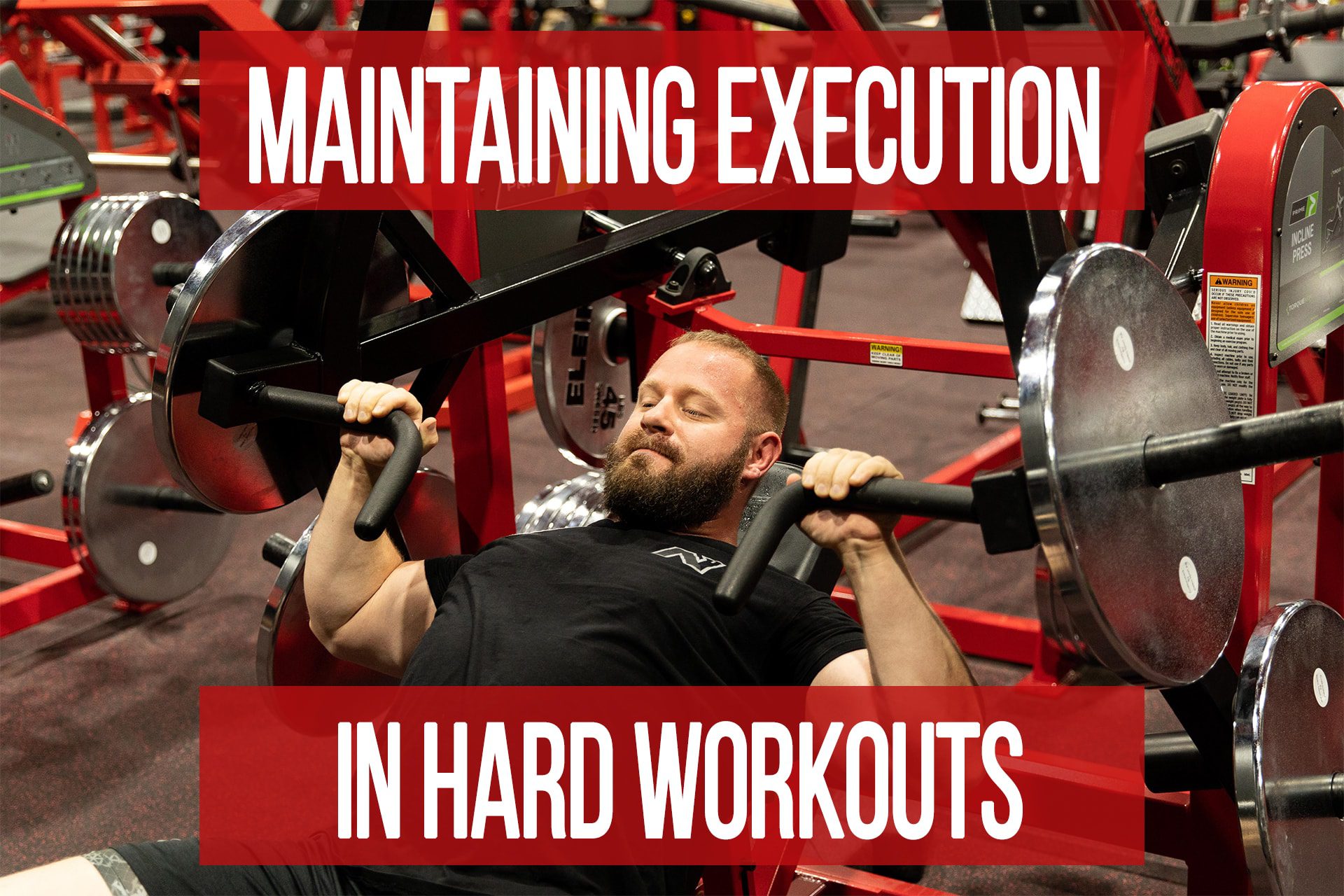
When you master exercise execution, you become a master of controlling muscle tension.  You control where the tension is, how much it is, and keep it continuous throughout your set.  This is essential for getting the physiological effect of any written program. Sets and reps are meaningless unless you are actually accomplishing the desired intensity and duration of tension that those sets and reps are meant to accomplish.


 

Local VS Global Stimulus for Growth

If we simplify the stimulus for muscle growth into the local and global.  Local being everything that happens within the muscle, as well as its receptors.  Global being factors outside the muscle itself such as growth hormone release from the pituitary, circulating testosterone, and systemic counter regulators like cortisol and inflammation.

Of the two (local and global), the local is the much more powerful stimulus, and in many ways necessary for the muscle to actually take advantage of any global stimulus.  This is why simply having elevated levels of hormones, naturally or artificially, still requires training for muscle growth.

Locally muscles respond to tension, mechanical damage, and biochemical stress generated during training.  Each of these stimuli has a threshold, that when reached will stimulate a pathway that ultimately leads to hypertrophy.  In a beginner, the threshold is incredibly low, which is why even the worst program, with terrible execution can result in beginner or noob gains.  As you train, the threshold for stimulating muscle growth increases because the muscle adapts, and becomes more efficient as well.


Quality Gets Faster Results Than Quantity

Execution is the key to being able to continually hit the threshold for muscle growth as your body and muscles adapt.  In order to keep increasing the stimulus of tension you have to be able to make an individual muscle contract harder and harder, especially as you get tired.  You see normally when the loads go up, or you get fatigued from reps or volume, you find more muscles, or momentum, or some other form of “cheating” to continue moving the weight.  

While this will allow you to move more weight for more reps today, it will actually decrease the tension stimulus in that muscle.  It doesn’t matter if you work longer or harder, if the muscle you are trying to grow is working hard and long enough to reach its threshold for a hypertrophy stimulus.  

This is where a lot of people plateau, and the first thing they do is try adding more work.  More sets, more volume. Unfortunately, when we are talking about tension, it’s not just time under any tension that matters.  It has to be time under a significant amount of tension. So doing more low quality reps will not help you stimulate hypertrophy.  


All Stimuli for Growth Require Good Execution

What about mechanical damage and biochemical stress?  Well they key to creating both of these is guess what? Tension.  Mechanical damage is going to be accomplished by having volume of high tension work, especially in the eccentric range.  Biochemical stress is accomplished more by having continuous tension for extended periods, taxing the muscles energy production and waste removal systems.  However even the biochemical stress will require a certain degree of tension to reach the threshold. Once again low quality work will make it hard to actually reach the threshold for all these stimuli.   

When you master exercise execution, you become a master of controlling muscle tension.  You control where the tension is, how much it is, and keep it continuous throughout your set.  This is essential for getting the physiological effect of any written program. Sets and reps are meaningless unless you are actually accomplishing the desired intensity and duration of tension that those sets and reps are meant to accomplish.


You Might Be Interested
More Videos
More Articles

Edit Workout

Rapidly customize your workout to your needs.

Drag & Drop from the right to re-order exercise groups.

Drag & Drop from the left to quickly create and update super sets.

Use the checkboxes to select exercises to combine into super sets or split up into straight sets.

Substitute or Add new exercises

Edit any exercise variables.

Use advanced set methods (like integrated partials)

Apply extended set techniques (rest-pause, drop sets, cluster sets, etc.)

Program Plans

After taking our training analysis quiz, you’ll have a long-term plan constructed for you. Your plan will consist of several Phases. Each Phase will present you with a few suggested programs to pick from. Each time you complete a program, you’ll move on to the next Phase and a new set of programs to select from.

This allows flexibility in the split and type of program you can choose, while we strategically periodize the stimulus you’re getting to keep making consistent progress without neglecting any weak links.

For example, a long-term plan with the goal of muscle gain will still occasionally include systemic conditioning or dedicated local metabolic work to keep your recovery capacity high (so you can grow and perform better during your hypertrophy-focused programs).