There are really only three exercise options when it comes to training calves. So let’s take a look at how they stack up so you can select more appropriately based on your goal.
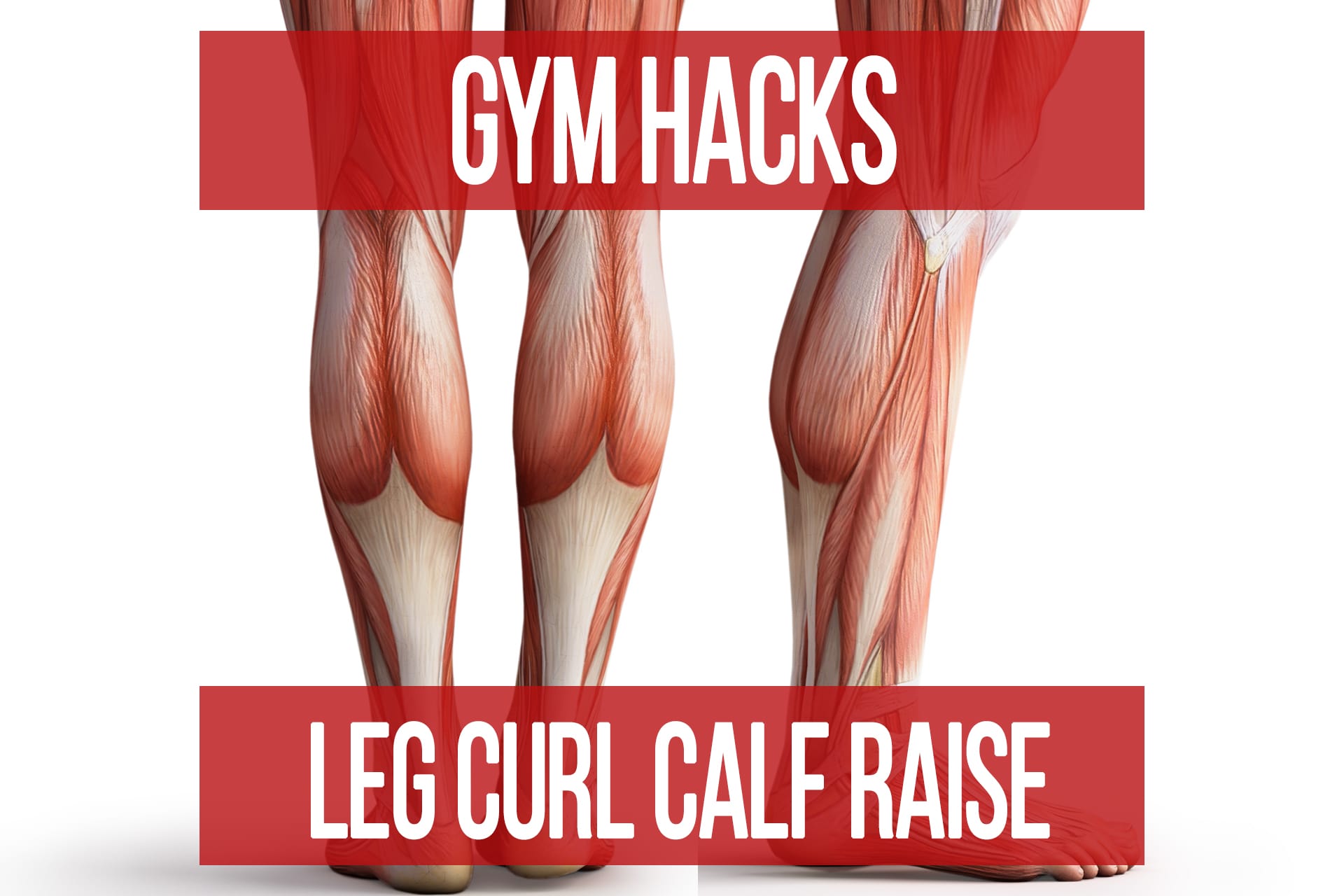
There are two muscles that make up the calves, the soleus and the gastrocnemius (which has two heads).
The gastroc is the big ‘meaty’ muscle that gives the great aesthetic appearance of large calves. It crosses both the knee and the ankle joint.
The soleus runs underneath the gastroc and only crosses the ankle.
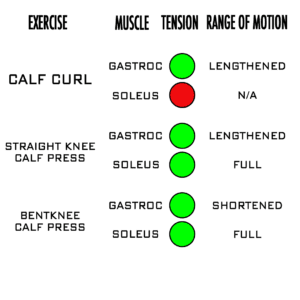
Straight Knee Calf Press: Both gastroc and soleus are trained. The gastroc is trained through it’s lengthened position and mid range, but doesn’t get fully shortened.
Bent Knee Calf Press: Both gastroc and soleus are trained. The gastroc is trained through it’s shortened position and mid range, but doesn’t get fully lengthened.
If your goal is aesthetics, focusing more of your hypertrophy efforts on building the gastroc is likely your best bet. Growing your soleus may add some thickness to your lower leg, but adding 50% to its mass won’t have nearly the same visual impact as adding even 25% to your gastroc. Don’t neglect the soleus, but doing exclusively seated calf raises won’t afford you nearly the same outcome as including a combination of calf curls and straight knee calf presses.
Utilizing these three exercise options allows us to set up a variety of training methods and stimuli. Since we are limited in our ability to get different resistance profiles in calf exercises, we have to utilize range of motion, tempo, rest periods, and other creative programming to achieve different stimuli. There are numerous ways to create super sets, but here are a couple examples you can try:
Option 1
Calf Curl – 8-12 reps, 2010 tempo, 45-75 second rest
Bent Knee Calf Press (Seated Calf Raise) – 8-12 reps, 2111 tempo, 45-75 second rest
Repeat for 3-5 total sets
Option 2
Straight Knee Calf Press – 6-10 reps, 3010 tempo, 15 second rest
Calf Curl – 10-16 reps, 1010 tempo, 75-120 second rest
Repeat for 3-4 total sets
Option 3
Bent Knee Calf Press – 6-10 reps, 2012 tempo, 15 second rest
Straight Knee Calf Press – 10-16 reps, 2010 tempo, 75-120 second rest
Repeat for 3-4 total sets