
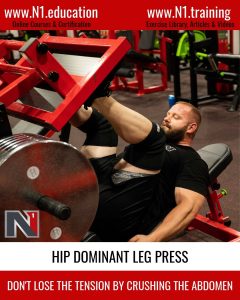
Hip Dominant Leg Press, Don’t Lose the Tension

n1 training

Two very common mistakes in the leg press both involve going outside your active range of motion. . 1 – is where you see the butt come off the pad, placing the load on the lower back. . 2 – For bulkier individuals, sometimes there is an end range before that. A lot of times you will see people jamming their thighs into their abdomen. In this case the lengthened position for the hips might be better trained in unilateral movements of widening the stance is not a viable solution. . This will prevent creating problems with the stability relationship between the hip flexors and spinal extensors as well as removing the unfavorable spikes in visceral pressure. . We love leg presses, but setup, execution, and simply being at an appropriate bodycomp are needed for ideal results.

Hip Dominant Leg Press, Don't Lose the Tension 2


Two very common mistakes in the leg press both involve going outside your active range of motion.

1 – is where you see the butt come off the pad, placing the load on the lower back.

2 – For bulkier individuals, sometimes there is an end range before that. A lot of times you will see people jamming their thighs into their abdomen. In this case the lengthened position for the hips might be better trained in unilateral movements of widening the stance is not a viable solution.

This will prevent creating problems with the stability relationship between the hip flexors and spinal extensors as well as removing the unfavorable spikes in visceral pressure.

We love leg presses, but setup, execution, and simply being at an appropriate bodycomp are needed for ideal results.


You Might Be Interested

Edit Workout

Rapidly customize your workout to your needs.

Drag & Drop from the right to re-order exercise groups.

Drag & Drop from the left to quickly create and update super sets.

Use the checkboxes to select exercises to combine into super sets or split up into straight sets.

Substitute or Add new exercises

Edit any exercise variables.

Use advanced set methods (like integrated partials)

Apply extended set techniques (rest-pause, drop sets, cluster sets, etc.)

Program Plans

After taking our training analysis quiz, you’ll have a long-term plan constructed for you. Your plan will consist of several Phases. Each Phase will present you with a few suggested programs to pick from. Each time you complete a program, you’ll move on to the next Phase and a new set of programs to select from.

This allows flexibility in the split and type of program you can choose, while we strategically periodize the stimulus you’re getting to keep making consistent progress without neglecting any weak links.

For example, a long-term plan with the goal of muscle gain will still occasionally include systemic conditioning or dedicated local metabolic work to keep your recovery capacity high (so you can grow and perform better during your hypertrophy-focused programs).